

How Long Does It Take to Become an EMT: The Path to Certification
Becoming an Emergency Medical Technician (EMT)
Becoming an Emergency Medical Technician (EMT) requires dedication, training, and a strong sense of responsibility. If you’re considering this career path, you might be wondering, “How long does it take to become an EMT?” Let’s break down the journey to becoming a certified EMT and explore the various options available to aspiring candidates- from 12 week EMT training courses to an accelerated EMT course.
The Path to Certification
1. Meeting the Basic Criteria:
Before starting, it’s essential to meet the basic criteria for EMT training programs. This typically includes having a high school diploma or GED, being at least 18 years old, and having a clean criminal record i.e., no felonies. In addition to these prerequisites, some states may require candidates to have a valid driver’s license and pass a physical fitness test. It’s also beneficial for candidates to have strong communication skills and the ability to work well under pressure.
2. Enrolling in a State-Approved EMT Course:
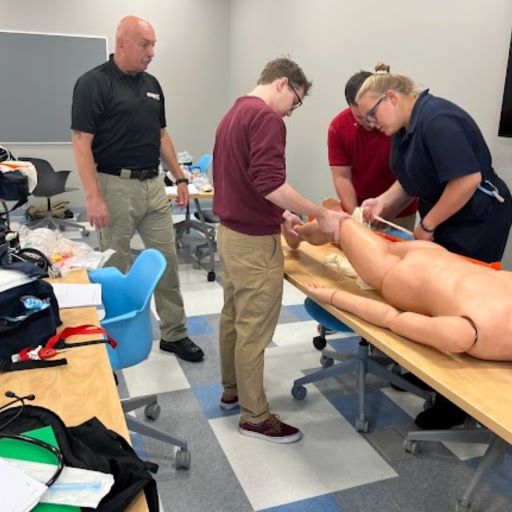
The first step towards becoming an EMT is enrolling in a state-approved EMT course. These courses are designed to equip candidates with the necessary knowledge and skills to handle emergency medical situations effectively. Most state-approved EMT courses last for 12 weeks. These 12 weeks are intensive, filled with both theoretical knowledge and practical training, ensuring that you are well-prepared for real-life emergency care. The curriculum typically covers topics such as patient assessment, trauma care, pediatric emergencies, and more. MissionCIT offers a hybrid 12 week initial EMT course, with online interactive sessions and in-person skills sessions.
3. Exploring Accelerated EMT Course Options:
For those who wish to expedite the learning process, accelerated EMT courses offer a viable solution. If you’re wondering how to become an EMT fast, opting for an accelerated course could be the answer. These courses, compress the 12-week curriculum into a shorter timeframe. MissionCIT offers 7-week and 4-week accelerated courses. The primary difference in the accelerated course is the class schedule. Instead of attending classes two days a week, accelerated courses often have classes five days a week. This condensed schedule allows motivated individuals to complete the program in a shorter duration.
4. Understanding the Structure of Accelerated EMT Courses:
Accelerated EMT courses, such as the 4-week program offered by MissionCIT, are structured to cover the same comprehensive curriculum as the standard 12-week courses. The main advantage lies in the intensity and frequency of classes. These programs are ideal for individuals who can commit to a full-time schedule and are eager to fast-track their EMT certification process.

5. Passing the NREMT Exam:
Regardless of whether you opt for the traditional 12-week course or an accelerated program, successfully completing the course is a significant milestone, but it’s not the end of the journey. After finishing the training, candidates need to pass the National Registry of Emergency Medical Technicians (NREMT) exam. This standardized exam assesses your theoretical knowledge and practical skills and is comprised of two (2) parts.
Cognitive Exam:
This computer-based test delves into crucial topics such as airway management, cardiology, trauma, medical emergencies, and obstetrics. Success in the cognitive exam demonstrates a profound understanding of EMT fundamentals.
Psychomotor Exam:
This practical test evaluates your ability to handle real-life emergency scenarios, showcasing your competence in performing critical tasks under pressure. You must pass both portions of the exam to achieve NREMT certification.
It’s crucial to note that portions of the cognitive and psychomotor exams remain valid for 24 months, provided you meet all other eligibility requirements. Candidates must have completed their training within the past two years, verified by the Program Director on the National Registry website. Additionally, having a current CPR-BLS for "Healthcare Provider" or equivalent credential is mandatory for exam eligibility.
6. Becoming a Certified EMT:
Once you pass the NREMT exam, you officially become a certified EMT in most states. This certification opens the door to various career opportunities, including working for ambulance services, hospitals, fire departments, and other emergency medical services organizations.
As an EMT, you will be responsible for responding to emergency calls, performing medical services and transporting patients to medical facilities. You will be expected to assess injuries and illnesses quickly and efficiently while providing immediate emergency medical care.
Conclusion:
Becoming an EMT is an attainable goal for anyone who is dedicated and willing to put in effort. The duration of your training journey ultimately depends on the path you choose, whether it’s the standard 12-week course or an accelerated program.
MissionCIT provides Hybrid EMT Courses. These 160-hour performance-based courses prepare you to pass the NREMT exam and enter the world of pre-hospital care. The program includes:
- Fifty-One (51) interactive chapters that are always available online
- Two (2) weekly online (Zoom) facilitated discussions in a flipped classroom environment
- EMT Tech Bag and equipment for practicing and performing the necessary skills
- In-person skills sessions on Saturdays or Sundays depending on the location
- Plus, a final skills evaluation
- Courses are approved by CTOEMS and conform to NREMT, NHTSA and AHA guidelines
- 46 Study Guides and 23 Skills Study Guides

We understand the importance of accommodating diverse schedules. That’s why we offer courses that fit your timeline, whether you prefer a comprehensive 12-week program, a more accelerated 7-week course, or an intensive 4-week option. With our adaptable schedules, you can learn at your own pace, ensuring that your educational journey aligns seamlessly with your lifestyle and commitments.
Related Posts
How To Choose EMS Recertification In 7 Simple Steps
How to Choose EMS Recertification in 7 Simple Steps Choose an EMS recertification course for your EMR, EMT, or paramedic
How to Choose EMS Training for Shift Staff in 7 Steps
How to Choose EMS Training for Shift Staff in 7 Steps Choose EMS training for shift staff by checking course