How Does Online EMT Coursework Support Hands-On Training?
Online EMT coursework supports hands-on training by giving you the knowledge behind every practical skill before you perform it. You learn how the body works, how to recognize an emergency, and how patient assessment drives care. Then you apply that knowledge in supervised skills sessions, where an instructor watches your technique and corrects it in real time.
At MissionCIT, our hybrid EMT courses combine three parts that build on one another: independent online study, live instructor-led discussions, and in-person skills sessions. This guide explains what each part covers, how they connect, how to prepare for skills training, and how finishing a course differs from earning your EMT certification.
What Do You Learn in Online EMT Coursework?
The online portion covers the knowledge base of the EMT curriculum: the material that tells you what to do and why. Core topics include:
- Anatomy and physiology: how body systems work and what happens when they fail.
- Patient assessment: scene size-up, primary and secondary assessment, vital signs, and reassessment.
- Airway, breathing, and circulation: recognizing respiratory distress, shock, and cardiac emergencies.
- Medical emergencies: diabetic, allergic, neurological, behavioral, and environmental emergencies.
- Trauma: bleeding, soft-tissue and musculoskeletal injuries, and head and spine injuries.
- Special populations and operations: pediatric, geriatric, and obstetric patients, plus EMS operations and safety.
You study through interactive online modules and chapter workbooks. You can also use EMS Mentor, MissionCIT’s AI-powered study companion, to work through National Registry-style questions any time. These tools build understanding and recall. They don’t replace instructor guidance or supervised practice.
How Do Live Discussions Prepare You for Skills Sessions?
Live discussions connect independent study to clinical reasoning. You can ask questions, clarify unfamiliar concepts, and examine why an assessment finding might change a patient care priority.
MissionCIT describes a flipped classroom approach: you complete assigned learning before facilitated discussions. Recorded evening sessions provide another opportunity to review explanations during the course.
Arriving prepared lets you focus on applying concepts rather than encountering terminology for the first time. Bring specific questions about procedures, safety, and scope boundaries to your instructor.
Why Is Hands-On EMT Training Still Required?
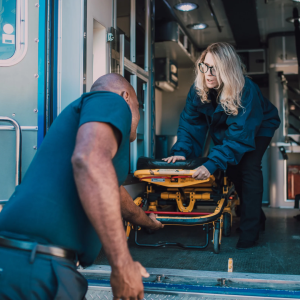
Hands-on training develops physical performance that reading and practice questions cannot establish. During supervised sessions, you work with equipment while an instructor observes your technique and provides correction.
Practical training connects knowledge with skills such as:
- Patient assessment and communication.
- Airway management and ventilation.
- CPR and automated external defibrillator use.
- Bleeding control and splinting.
- Patient movement and coordination with partners.
An instructor can identify a missed assessment step, uncertain equipment handling, or unclear communication. Repeating the activity after correction helps you address the specific issue. Practice only the activities your instructor authorizes, using the required supervision and safeguards.
How Does MissionCIT Combine Online and In-Person Learning?
MissionCIT’s hybrid EMT courses combine interactive online material, live instruction, and required in-person skills sessions.
Students have access to chapter workbooks and EMS Mentor, an AI-powered study companion for National Registry-related questions. These resources support review but do not replace instructor guidance or supervised practical training.
The accelerated five-week format distributes skills sessions across the course. The six-week Hybrid EMT Boot Camp concentrates in-person skills instruction into a final week in Shelton, Connecticut. Check the specific course calendar for attendance and completion requirements.
How Should You Prepare for EMT Skills Training?
Prepare by completing assigned coursework and reviewing instructor-provided materials before each session.
- Review the purpose of each skill. Explain what it accomplishes and when it applies.
- Write down questions. Identify concepts, safety considerations, or scope boundaries you need clarified.
- Practice explaining your reasoning. Use instructor-approved scenarios to rehearse communication.
- Track feedback. Record corrections and revisit them during your next supervised session.
To find a course format that fits your circumstances, review MissionCIT’s training options and confirm the required study, attendance, and travel commitments before enrolling.
Does Completing an EMT Course Make You a Certified EMT?
No. Finishing your course is the first step, not the last. In most states, including Connecticut, becoming a working EMT generally involves three stages:
- Complete a state-approved EMT course. This includes the coursework and the required skills competencies, which your program verifies.
- Pass the National Registry (NREMT) cognitive exam. This computer-adaptive exam covers the full EMT curriculum. Completing your course makes you eligible to take it.
- Obtain your state certification. In Connecticut, this is issued through the Department of Public Health’s Office of Emergency Medical Services. Requirements can include an application, a background check, and fees.
Requirements change and vary by state, so confirm the current steps with the NREMT, your state EMS office, and your MissionCIT instructor.
MissionCIT Accelerated Training
MissionCIT is committed to helping you take the next step in your EMS career with confidence. Our accelerated EMT courses are designed for motivated students who want high-quality training on a focused, efficient timeline. With experienced instructors, hands-on skills labs, and a learning environment built around real-world readiness, MissionCIT prepares you to enter the field sooner and stronger. Our next accelerated sessions are coming up soon, and seats fill quickly. If you’re ready to start your EMS career without unnecessary delays, now is the time to register.
Register now and secure your spot in an upcoming accelerated EMS class at MissionCIT by visiting our course page!
Email us at [email protected]
Or call us at +1 203-649-5090