

The Leadership Gap in the Fire Service
In the fire service, leadership is one of the most discussed topics—and one of the least systematically developed. Departments talk about the need for strong officers, better communication, and healthier crews. Yet too often, action stops at the conversation.
That gap matters.
Because the fire service does not just need experienced firefighters. It needs capable leaders who can make decisions under pressure, build trust, develop people, and create consistency across the organization.
What is the leadership gap in the fire service?
The leadership gap in the fire service is the disconnect between how people are promoted and what leadership actually requires.
In many departments, promotion is still heavily influenced by tenure, technical competence, testing performance, or operational reputation. Those factors matter—but they are not the same as leadership readiness.
A firefighter can be highly dependable on scene, technically skilled, and deeply respected by peers, yet still be unprepared for the demands of leading a crew. Leadership requires a different set of competencies: communication, accountability, coaching, conflict management, decision-making, emotional intelligence, and the ability to influence culture over time.
Why talking about leadership is not enough
Most departments are not ignoring the issue. In fact, many openly acknowledge it.
They discuss inconsistent supervision, low morale, challenges in developing future officers, and ongoing issues with burnout, retention, and strong command presence.
But awareness alone does not close the gap.
Without intentional action, leadership development becomes reactive. Departments wait until someone promotes, struggles, and learns in real time—often with an entire crew absorbing the impact. Instead of preparing people before they lead, organizations expect them to develop leadership skills after they have already been placed in positions of influence.
That approach is costly, and not just operationally.
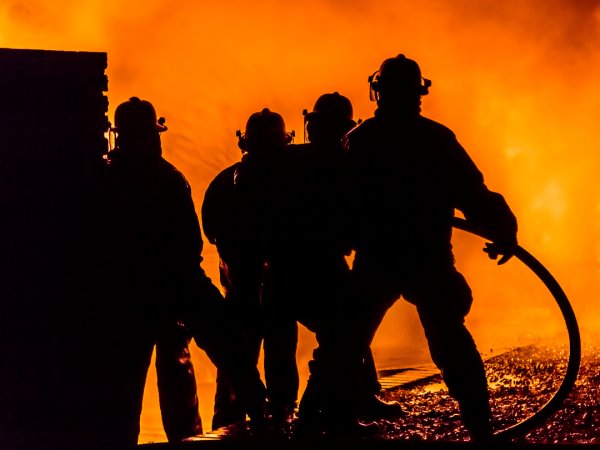
How the fire service promotes people vs. what leadership actually requires
Promotion systems are often designed to measure what is visible and easy to evaluate: years served, certifications earned, test scores, tactical knowledge, and experience in the field.
Those are important indicators of professional readiness. But leadership is not only about what someone knows. It is also about how they show up for others.
Strong leadership requires an officer to:
• communicate expectations clearly
• make sound decisions when information is incomplete
• correct performance without eroding trust
• mentor newer members and develop future leaders
• manage conflict within the crew
• create accountability with consistency and fairness
• stay steady under pressure and model professionalism
These are not secondary skills. They are central to whether a crew functions well over time.
When promotion systems emphasize technical excellence without equal attention to leadership capability, departments risk elevating people into roles they have not been equipped to succeed in.
The difference between being a good firefighter and being a good officer
A good firefighter and a good officer contribute in different ways.
A good firefighter is often evaluated by personal performance: tactical execution, reliability, work ethic, preparation, and composure on the job. These qualities are essential. Every department needs them.
A good officer, however, must multiply performance through others.
That means the role shifts from individual execution to team leadership. Officers are responsible not just for doing the work, but for setting the tone, clarifying expectations, reinforcing standards, developing confidence in others, and making the crew more effective as a whole.
This is why the best firefighter is not automatically the best officer.
The transition from peer to leader can be difficult. The communication style that worked as a crew member may not work as a supervisor. Technical confidence does not always translate into coaching ability. Informal credibility does not always become structured leadership.
Without preparation, even highly respected firefighters can find themselves struggling in officer roles they worked hard to earn.
From awareness to action with No-Nonsense Leadership
For departments that recognize the leadership gap, the next step is not simply to talk about leadership more. It is to build a clearer path for developing it.
That is where structured leadership development becomes essential.
At MissionCIT, we work with first responder organizations that need more than awareness—they need practical ways to prepare people for the responsibilities that come with leadership. Through training, testing, and professional services built for the realities of public safety, departments can take a more intentional approach to developing officers and strengthening their organizations.
NNL is part of that shift.
For departments looking to move from recognizing the problem to addressing it with purpose, NNL represents a way to focus leadership development where it matters most: on the people responsible for setting the standard, guiding the crew, and shaping the future of the fire service.
The Bottom Line
The fire service has never lacked committed people or strong performers. What it often lacks is a consistent, intentional system for developing leadership before and after promotion.
Too often, firefighters are placed into officer roles expected to “figure it out” on the job. But leadership isn’t something that develops automatically with time or rank—it directly affects crews, culture, and daily operations.
When leadership isn’t intentionally developed, the effects build over time: inconsistent expectations, weakened trust, and avoidable strain within teams.
Closing that gap doesn’t require more discussion about leadership. It requires structure—clear standards, deliberate development, and ongoing reinforcement of what effective leadership looks like in practice.
When departments treat leadership as a skill to be built, not assumed, crews become more stable and organizations become more consistent.
The opportunity is simple: develop leadership before it’s needed, not after it becomes a problem.
MissionCIT Officer Development
MissionCIT is committed to helping fire departments build confident, capable officers through practical, real-world leadership development. Their Officer Development and Fireground Command courses are designed to strengthen decision-making under pressure, improve communication, and develop true command presence—grounded in the realities of the fireground, not classroom theory.
Built around scenario-based learning and operationally relevant challenges, the program prepares current and aspiring officers to lead effectively from day one. Whether transitioning from firefighter to officer or sharpening existing leadership skills, the training focuses on consistency, accountability, and the ability to make sound decisions in dynamic environments.
Explore Officer Development and Fireground Command training here: MissionCIT Leadership & Command Courses
Email us at [email protected]
Or call us at +1 203-649-5090