

On-Site Testing vs Remote Testing: A Cost Breakdown
For small and volunteer fire departments, every dollar carries weight. Recruitment cycles are becoming more competitive, applicant pools are expanding, and departments are expected to maintain fair and validated hiring processes. The challenge is not whether to test candidates, but how to do it without overextending limited resources.
Understanding the Cost of On-Site Testing
On-site testing has long been a trusted and effective method for firefighter hiring. It provides a structured environment where departments can directly oversee the testing process and ensure consistency across all candidates.
That level of control can be valuable, especially for departments that prefer a hands-on approach. Candidates report to a single location, testing conditions are standardized, and administrators can manage the process in real time.
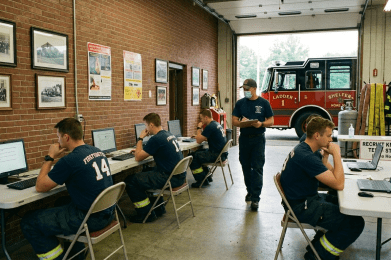
At the same time, on-site testing comes with costs that extend beyond the exam itself. Departments must account for space, setup, equipment, and staffing. Whether using an internal facility or an external venue, there are time and resource commitments required to execute a successful testing event. For departments with limited personnel, this can mean pulling staff away from daily responsibilities.
On-site testing tends to work best when departments have a consistent number of candidates and the internal capacity to support the logistics.
How Remote Testing Changes the Cost Structure
Remote testing offers a different approach by removing many of the logistical requirements tied to in-person exams. Candidates complete the test from their own environment, which eliminates the need for a centralized location and reduces the amount of staff required to administer the process.
This shift creates a more flexible cost structure. Instead of building an entire testing event around a single date and location, departments can scale testing based on the number of candidates. That flexibility is particularly useful for small departments or volunteer fire departments where applicant volume can vary.
Remote testing also allows departments to move more quickly. Without the need to coordinate facilities and staffing, exams can be scheduled and deployed in a shorter timeframe, helping departments stay aligned with recruitment demands.
Accessibility and Candidate Experience
Both models offer advantages when it comes to the candidate experience. On-site testing provides a traditional, structured setting that some candidates prefer, especially those who perform best in a controlled environment.
Remote testing, on the other hand, removes barriers related to travel and scheduling. This can expand the applicant pool and make it easier for departments to reach candidates who may not otherwise participate. For volunteer fire departments in particular, this added accessibility can lead to stronger turnout and more diverse applicant groups.
Finding the Right Fit for Your Department
There is no one-size-fits-all solution. The right approach depends on your department’s size, resources, and hiring goals.
On-site testing can be a strong choice when a department values direct oversight, has reliable staffing for administration, and expects a consistent number of candidates.
Remote testing is often the better fit when flexibility is a priority, resources are limited, or candidate numbers fluctuate. It allows departments to run efficient testing cycles without the need for large upfront commitments.
Many departments are now using a combination of both, leveraging on-site testing when appropriate while incorporating remote testing to expand reach and reduce costs.
The Bottom Line
On-site testing and remote testing each bring distinct advantages. The key is not choosing one over the other, but understanding how each fits into your department’s overall hiring strategy.
For small and volunteer fire departments, balancing cost, efficiency, and accessibility is critical. Departments that take a flexible approach to testing are often better positioned to meet today’s recruitment challenges.
MissionCIT supports both on-site and remote testing solutions, helping departments implement a process that aligns with their needs. Whether you are looking for hands-on administration, scalable remote options, or a combination of both, the goal is the same: a reliable, efficient path to hiring the right candidates.
MissionCIT Entry Exam Platform
MissionCIT is committed to helping fire departments modernize their testing process with confidence. Our remote exam platform delivers secure, flexible, and fully customized assessments built around your department’s own materials, ensuring every candidate is evaluated on what truly matters. With advanced proctoring, immediate scoring, and a range of testing formats—including scenario-based questions and video-delivered oral boards—MissionCIT provides a consistent, fair, and efficient testing experience for both entry-level and promotional exams.
Upgrade your department’s testing process, request a demo today and see how MissionCIT can work for you – Fire Department Remote Exam Platform
Email us at [email protected]
Or call us at +1 203-649-5090