How EMS Education Builds Skills Beyond Basic EMT
Becoming an Emergency Medical Technician marks the beginning of a career in emergency medical services, not the destination. What separates confident first responders from those who hesitate under pressure is the depth of training they receive. EMS education programs equip aspiring and current professionals with the clinical judgment, practical skills, and ongoing growth opportunities needed to excel in demanding real-world scenarios.
This article explores how structured EMS training goes beyond memorizing protocols. You’ll discover how hands-on practice, hybrid learning formats, and professional development pathways help first responders build lasting competence and career resilience.
Key Takeaways: How EMS Education Builds Skills Beyond Basic EMT
- EMS education programs build clinical judgment through scenario-based training and real-world decision-making practice.
- Hands-on skills sessions transform theoretical knowledge into confident, muscle-memory responses during emergencies.
- MissionCIT combines online coursework with in-person practice to accommodate the schedules of working first responders.
- Hybrid learning formats allow you to study at your own pace while still receiving live instruction and feedback.
- Professional development courses create clear advancement pathways from entry-level EMR to paramedic and leadership roles.
What Is the Difference Between Basic EMT Knowledge and Advanced EMS Skills?
Basic EMT certification teaches you the foundational protocols for patient assessment, airway management, and emergency transport. These entry-level competencies cover essential skills like taking vital signs, performing CPR, and stabilizing patients for transport to medical facilities.
Advanced EMS education expands on this foundation by developing your ability to adapt protocols to complex, unpredictable situations. You learn to recognize subtle signs of patient deterioration, make rapid triage decisions, and coordinate effectively with hospital staff and other responders.
The shift from memorizing steps to exercising judgment happens through repeated practice in realistic scenarios. Programs that combine classroom theory with hands-on skills sessions help you build the confidence to act decisively when seconds count.
Why Do Flexible Learning Options Matter for First Responders?
Many aspiring EMTs and current first responders already work demanding schedules. Volunteer firefighters, full-time career professionals, and career changers often cannot commit to traditional classroom-only programs that meet during standard business hours.
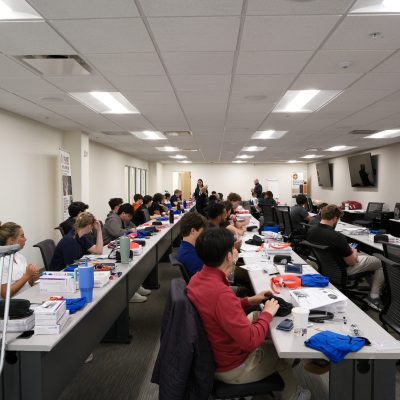
Hybrid training formats address this challenge by combining online coursework with scheduled live sessions. You complete reading assignments and watch instructional videos at times that fit your schedule, then attend virtual or in-person sessions to review material with instructors and classmates.
This approach does not sacrifice educational quality for convenience. Live Zoom sessions create opportunities for discussion, questions, and peer learning. In-person skills days ensure you receive hands-on practice with direct instructor guidance before sitting for certification exams.
What Role Does Clinical Judgment Play in EMS Education?
Clinical judgment means knowing which protocol to apply, when to deviate based on patient presentation, and how to prioritize when multiple patients need care simultaneously. This skill develops through exposure to varied scenarios and guided reflection on decision-making.
Effective EMS education programs present case studies that challenge you to think beyond the obvious. You might encounter a patient whose symptoms don’t match a textbook presentation, or a scene where environmental hazards complicate your response.
Instructors with field experience share stories from their own careers, helping you understand how seasoned responders approach ambiguous situations. These discussions teach you to stay calm, gather information methodically, and make sound decisions under pressure.
How Do EMS Education Programs Support Ongoing Professional Growth?
Initial certification is just the first step. Maintaining your credentials requires completing continuing education hours that keep your knowledge current with evolving medical practices and regulatory requirements. The National Continued Competency Program (NCCP) establishes standards for recertification across different EMS levels.
Beyond maintaining certification, many first responders pursue advancement to higher credential levels. An EMR can progress to EMT, then to Advanced EMT, and eventually to Paramedic. Each level requires additional coursework, clinical hours, and examination.
MissionCIT offers NREMT test preparation resources and recertification courses for EMR, EMT, and Paramedic levels. These programs ensure you can maintain and advance your credentials without interrupting your career.
What Should You Look for in an EMS Education Program?
Accreditation matters. Programs approved by state EMS offices and aligned with National Registry of Emergency Medical Technicians (NREMT) standards ensure your certification will be recognized. Look for courses that explicitly state their approval status and NCCP compliance.
Instructor qualifications directly impact your learning experience. Seek programs led by licensed EMS professionals who actively work in the field. Their real world perspective adds context that purely academic instructors cannot match.
Support resources indicate a program’s commitment to student success. Access to study guides, practice exams, and instructor office hours helps you prepare thoroughly for certification tests. Programs that continue supporting students until they pass demonstrate genuine investment in outcomes.
In Conclusion: Building a Foundation for Long-Term EMS Success
EMS education programs develop far more than technical proficiency with protocols and procedures. The combination of theoretical knowledge, hands-on practice, clinical judgment exercises, and ongoing professional development creates well-rounded first responders capable of handling whatever challenges arise.
Choosing a program that fits your schedule, meets accreditation standards, and supports your long-term career goals sets you up for success. Whether you’re pursuing initial certification or advancing to higher credential levels, quality education builds the foundation for confident, competent emergency care.
MissionCIT Accelerated Training
MissionCIT is committed to helping you take the next step in your EMS career with confidence. Our accelerated EMT courses are designed for motivated students who want high-quality training on a focused, efficient timeline. With experienced instructors, hands-on skills labs, and a learning environment built around real-world readiness, MissionCIT prepares you to enter the field sooner and stronger. Our next accelerated sessions are coming up soon, and seats fill quickly. If you’re ready to start your EMS career without unnecessary delays, now is the time to register.
Register now and secure your spot in an upcoming accelerated EMS class at MissionCIT by visiting our course page!
Email us at [email protected]
Or call us at +1 203-649-5090